Thursday, December 30, 2010

King Crimson “In the Court of the Crimson King” (1969)

Released in progressive rock's ground zero year of 1969, King Crimson's debut instantly upped the ante in terms of expanding the possibilities of where rock music could go, it's expansive songs and the individual members' mastery of their instruments defining the genre. One seriously heavy and hyper-intelligent statement, In the Court of the Crimson King explodes with the primal, scalding venom of "21st Century Schizoid Man," as lyricist Peter Sinfield's Vietnam-era imagery of "innocents raped by napalm fire" delivered through Greg Lake's distorted vocals are encircled by a torrent of lacerating Fripp guitar chords, tightly controlled high-octane ensemble passages, and free-jazz discord from Ian McDonald's layered sax solo. "21st Century Schizoid Man" sets you up for an almost reverse-whiplash effect, as tracks like the exploratory "Moonchild" and lush chamber balladry of "I Talk to the Wind" widen the scope further with their fragility, while the stately "Epitaph" and bombastic title track are carried on the towering waves of a booming, primitive/modern mellotron orchestra, as images of doom and destruction abound. In the Court of the Crimson King would set the template for much of King Crimson's work, despite the band's multiple lineup changes, with it's ability to bludgeon, soothe, and strike a nerve throughout this landmark release resulting in a distinguished rock institution. –Ben

Wednesday, December 29, 2010

Miles Davis “Get Up With It” (1970)

Without a doubt, one of the greatest albums of them all, a double set only comparable to the likes of the Stooges' "Funhouse" in its darkness, intensity and raw, funky sexuality. Now for starters let's get something straight: I loathe "fusion", and to even CONSIDER putting Miles' music of the '70s in that category - a genre filled with lilly-livered chumps like Return To Forever and the Yellow Jackets - is a great disservice to Miles and his music. From 1969 to '75, Mr. Davis pioneered and created his own unique sounds, a mixture of hard funk, psychedelic rock, avant-garde electronics and free jazz, that has never been equalled in regards to its sonics or its "vibe". There is NOTHING that can touch the raised-middle-finger jab in the guts felt when one puts on discs like "Dark Magus", "Live Evil", "Agharta", "Big Fun" or "On The Corner". The feelings of utter loathing and despair, the overwhelming EMOTION of these discs can be too much, yet nothing can prepare you for 1974's "Get Up With It", a disc of such wildness and total lack of any commercial forethought (and thank the heavens for that) that it was granted pretty much instant deletion upon release and has mainly only been available from Japan for the last 25 years.

Start with the cover: a big, slightly unflattering, grainy photo of The Man. It's the sight of a man against the world, battling for his own identity. Hit the first track, "He Loved Him Madly" (a tribute to Duke Ellington), a 32-minute ambient piece only broken up occasionally by Peter Cosey's mumbling guitar lines. It's one of the saddest damn songs you'll ever hear, and you can bet yer booty that if it was made by a bunch of white guys in Berlin ca. '71, every Krautrock freak in town would be hailing it as a classic. Next track "Maiysha" is a schizophrenic one. For ten minutes in merely putters along like a lite Latin number, interrupted sporadically by Miles' Sun Ra-like organ, then it stops, gets into a hard groove and proceeds to move along to Peter Cosey's awesome guitar screeches for another five minutes. Hot. "Honky Tonk" is up next, a brief interlude of stop-start rhythms and noisy organ crunch. It prepares you for the next track the unstoppable "Rated X", THE peak of Miles' - or maybe anyone's - sonic capabilities. Part hyperdive breakbeat rhthyms, part uber-funk, and nine parts pure noise, there is no other sound on earth as MOVING as this song. Get up with it. Disc two starts with "Calypso Frelimo", another 32-minute piece that starts where "Rated X" finishes off. Ecstatic peaks of dark psychedelic jamming, aided by Miles' wah-wah'd trumpet, gel and compete. "Red China Blues" is a brief number that kicks it in a Chess-Records-meets-Ornette way, and the 15-minute+ "Mtume" once again takes you for a ride with its collision of Cosey's guitar (a highly under-rated player in a field with the likes of Sonny Sharrock) and about half a dozen percussionists. Finishing is "Billy Preston", more chilling mid-range avant-funk to close the set. "Get Up With It" is the perfect summation of what was filling Miles' head at the time: the avant electronics of Stockhausen, the cyclical funk of James Brown, the wailing psych guitar of Hendrix, the improvised freeness of Ornette Coleman and as The Man himself put it, "a deep African thing". Many words have been written on Miles' music of this period, but to really GET it, you have to LISTEN to it. Not a word is spoken on GUWI, yet it speaks volumes on its creator's alienation and sense of despair. As far as so-called "out-rock" goes, this is about as "out" as you could get, and certainly about as purely "psychedelic" as music has ever gotten, so do the done thing and get with it. –Dave

Sunday, December 26, 2010

ZZ Top - Tejas (1977)

1977s Tejas is a transition album for Texas rockers ZZ Top. It is the beginning of their step away from the Blues Rock that had brought them fame and a lot of record sales and towards the 1980s Electronic Blues that would eventually make them a worldwide phenomenon. There is more of the former Blues Rock than the latter Electronica here though. Tejas is almost as good a ZZ Top's masterpiece Deguello, but is held back by some weaker tracks, something Deguello didn't suffer from. Still there are some amazing songs here, notable the blazing, yet tongue in cheek Arrested for Driving While Blind, the countrified and rollicking She's a Heartbreaker, and the achingly beautiful Asleep in the Desert. Overall Tejas is an important part of ZZ Top's discography, and a very good album. –Karl

Thursday, December 23, 2010

The Ventures “The Ventures Christmas Album” (1965)

The Ventures, who seemed to crank out a dozen-odd albums every year during their heyday in the 1960s, released this gem in 1965. It distinguishes itself from its holiday brethren by using a mixture of two styles that should be antitheses of each other: the Christmas carol and surf music (or more fundamentally, winter and summer). Traditionally, the heart of each of these styles lies in evoking a mood. The danger in trying to evoke two moods simultaneously is that it might become a hokey mishmash (like those "Santa-in-a-Hawaiian-shirt" tourist trinkets for sale in the islands). Through the skill of The Ventures and their producers, however, the two are combined into a fairly seamless whole, both heartfelt and fun - a pretty nifty trick. As on their other surf records, the guitar tones of Don Wilson and Nokie Edwards are still king, but sleigh bells (more or less subbing for the hi-hat) and glockenspiel challenge for supremacy in the mix. This elf approves! Favorites from the album include the majestic "What Child Is This" and "Silver Bells." –Wilson

Monday, December 20, 2010

Yes “Time and a Word” (1970)
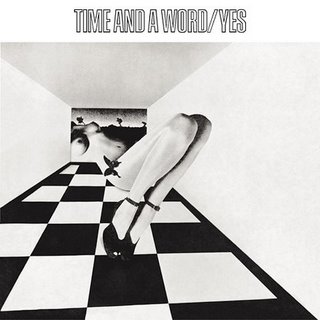
1970s Time And A Word is one of the greatest first-generation Progressive Rock albums, and a wonderful musical snapshot of a young and unsettled Yes that hadn't quite yet settled into their later Prog Godhood role. Only two-thirds of the "classic" Yes lineup is here, Jon Anderson at Frotman, and the wondrous Chris Squire at Bass and Bill Bruford at Drums. Otherwise it's part-time Yes man Tony Kaye on Keyboards and Yes's original (And quite substandard compared to Steve Howe) Guitarist Peter Banks. Still Time And A Word is a wonderful solid album with some truly amazing songs hidden in it's grooves. The title track is, in my opinion, the most gorgeously beautiful song Yes ever created. And No Opportunity Necessary No Experience Needed is simply thrilling. If you are a fan of Yes, or Progressive Rock you need Time And A Word. –Karl

Sunday, December 19, 2010

Van Morrison “Astral Weeks” (1968)

“If I ventured in the slipstream, between the viaducts of your dream...” and so opens the poetic dream masterpiece, Van Morrison’s “Astral Weeks.” It's one of those monuments to human emotion that has the power to carry the weight of your life with it. The funny thing is, I really wasn’t feeling Van for the longest time, always shelving him away in the “mom-rock” bin. Then all of a sudden something hit me and quickly snowballed into the realization of his genius. With Astral I find the strength lies in the fact that, although the production is both classical and traditional in instrumentation, the record comes across as highly psychedelic from the mysticism of the arrangements. It’s similar in that way to the first few Leonard Cohen records or Townes Van Zandt’s “Our Mother the Mountain,” And for being such a contender among quality poetic-psyche LP’s, it’s easily available and usually pretty cheap, so there's no reason why you can't check it out. –Alex

Tuesday, December 14, 2010

Charles Wright and the Watts 103rd St. Rhythm Band “Express Yourself” (1970)

Somewhere between the Funk formalism of James Brown and free-spiritedness of Sly Stone can be found Charles Wright. In a perfect world, this enormous talent would be mentioned in the same breath as Redding, Gaye, and Green, but Wright's long-term success was hobbled by the line-up changes of his various backing bands, inconsistent records, and other music biz unpleasantries. Though he recorded lots of great music–even his weakest efforts are at least worth hearing–this record is his shining moment. Its title track is its most famous (and most sampled), but other tracks like I Got Love and the free-form funk freakout, High as Apple Pie parts 1 & 2, give it a Gospel-like sense of joy. Few reissued records have caused as much confusion as this one. The original release kicked off with a tight little number called A Road Without End. Future pressings, however, replaced that track with Love Land, which appeared on his previous LP, In the Jungle Babe. Love Land is a great song in its own right, but it doesn't suit the feel of Express Yourself as well as the track it replaces. For this reason, an original pressing of the record is well-worth tracking down. –Richard P

Sunday, December 12, 2010

Back “Sea Change” (2002)

Covering The Zombies, John Martyn, and Nick Drake during his sessions and tour of Sea change, Beck's influences are clearly heard and channeled this time around. While Mutations was all over the place, here Beck works on a very focused playing ground yet stretching some songs to the limit like the bare "Paper Tiger" or very solemn "It's All in Your Mind". His voice reaches such a level of power and beauty that could never have been foreseen coming from Mr.MTV Makes Me Wanna Smoke Crack, especially in the country tinged "Guess I'm Doing Fine". There is just such a chilling yet peaceful tone to Beck's voice and overall melodies that fully captures what the man must've felt to put out such an unpredictable yet honest record.

Beck has always channeled his place in life and views throughout his albums, whether people could see it through his bizzare language and theatrics is something less debatable. Mutations was his Moon & Antarctica (read: Hopeless, disenchanted sad sack record) but you would have never known, but here we see the most straightforward lyricism yet from Beck. The bitterness ("Is that what you thought love was for?"), the one sided love ("I can't cry them anymore/I can't think of what they're for"), and hopeful hopelessness ("Let it pass on the side of the road/What a friend could tell me now"); Everything here is easy to read into yet nonetheless powerful or mysterious.

As much of a downer Sea Change was in 2002, it gave me a real sense that Beck went on this sorrowful, soul-draining spiritual journey so I wouldn't have to. It was quite the opposite but Sea Change turned out to become one of the best friends I've had. Life's turned out to be less of my own private award show of Mr. Holland's Opus and more of a grim train ride passing by everyone I've hurt and everyone that's failed to see how I've helped them. I guess I'm at the "Already Dead" part of my life working up to "Side of the Road", so it makes sense that the 2nd half of the album has began to click with me. It's also has begun to make sense how strangely beautiful the most awful moments of your life can be, especially when Sea Change is your soundtrack. –Allistair

Thursday, December 09, 2010

Fleetwood Mac “Tusk” (1979)

I believe that the true power in this world is love. There's obviously a strong universal relation to the longing of the soul. I also believe that Fleetwood Mac just might be the best musical representation of love. I could probably write about any Mac record, making similar points, TUSK just happens to be living on my turntable at the moment. It's not a perfect album by any means, but when you dive deep into this band, it all hits the spot. TUSK is the double-LP follow up to their multi-platinum break up monster, Rumors. Of course there's no way Tusk could ever have been nearly as much of a commercial success, but that's what's nice about it for me, there's at least one full-length records worth of killer pop "anti" hits that still satisfy the listener in the same way, beautiful vocal coloring over lindsey buckingham's percussive strumming and driven home by that wonderful snare crack that mick fleetwood perfected in the pop years. Plus this seems to be the point where Buckingham really took over the production and, for lack of a better term, went insane. So the arrangements are wacky as hell at some points and he must have played at least 50 different stringed instruments on it, but what's love without craziness? Give this a chance if you haven't already. For lovers only. –Alex

Wednesday, December 08, 2010

Repost: King Crimson “Red” (1974)

A caged beast of a record, and easily this group's best, it strips away most of their obscurantist pretensions to serve up a guitar bass and drum assault that runs frequently into the red and is something to behold: Bruford's drumming is jaw-dropping, while Fripp plays with a dark metallic intensity that suggests he's one of rock's wasted talents. I can even put up with John Wetton here, whose ferocious bass playing is more like a second (maybe third) lead instrument and whose singing has a kind of macho bravura that suits this music's seething intensity. Still, the beast is caged. I'm always a little let down by the second side, which is what keeps Red from essentially essential status, with the wandering "Providence" (another crack at the improv-based excursions heard on the previous album) and the somewhat undercooked "Starless." No, I'm not kidding: "Starless," which many listeners seem to think is a masterpiece, could've used a little more work. I'm forever disappointed by the whole trajectory of this track, which at 12-some minutes would've benefited from a few more (the majestic ending should've been lengthier, to provide a kind of bookend equivalent to the sturm-und-drang of "Red;" it may be quibbling, but it's my party and I'll cry if I want to). So, instead of the Godzilla of prog-rock tracks, "Starless" is merely a woolly mammoth. This group never made the great record they should've made. This one's the only one that comes close. And oh so close. –Will

Monday, December 06, 2010

Go-Go’s “Beauty and the Beat” (1981)

Much as the Rock press would like to think, The Go-Go's were never Punk Rock. What they did take from Punk was the ethos rather than the music, the ability to form a band from a group of like minded individuals who perform music, disregarding technical musical ability or preconceived notion that rock is a masculine world, and for a brief moment they were the Darlings of the music industry. "Beauty And The Beat" is a testament to this ethic, brash, fun, slightly shambolic, but always heartfelt Power Pop. Formed in 1978 and originally called The Misfits and made up of Belinda Carlisle (Vocals), Jane Wiedlin (Guitar, Vocals), Charlotte Caffey (Guitar, Vocals), Margot Olaverra (Bass), and Elissa Bello (Drums), the band's major breakthrough would come through building a following from their support slot for British Ska nutty boys, Madness, and this led to a contract with Stiff Records for a one off single "We Got The Beat". The major record labels showed an interest in both the single and the live following the band were attracting, and The Go-Go's signed to IRS in early 1981. This, their debut would reach number 1 in the Billboard album charts for 6 weeks and would eventually go to sell over 2 million copies. Spiky Power Pop at its best, the Jane Wiedlin/Terry Hall co-composed single "Our Lips Are Sealed" would be the star attraction, along with other highlights including "We Got The Beat", "This Town", "Lust To Love", and the fine closer "Can't Stop The World". A surprisingly assured album, that carries alongside its demure directness, a touching astuteness. –Ben H

Thursday, December 02, 2010

Tim Buckley “Starsailor” (1970)

Tim Buckley had already begun to alienate his folkie fanbase with “Lorca” a few months earlier– what the hell was up with this golden-voiced disciple of Fred Neil? Why would he release an album filled with meandering free jazz-like structures and vocal gymnastics that made it sound as though he was being disemboweled? Well, if they wuz bewildered by “Lorca,” “Starsailor” musta felt like a kick in the groin. Not only was it a continuation of the avant garde themes which in hindsight, he’d barely scratched, it was a full-on operetta revolving around the pit of anguish that burned in his guts; he also began to fully utilize the five and a half octave vocal range he had at his disposal.

I’m gonna hazard a guess that Buckley had been listening intently to Leon Thomas– particularly his work with Pharaoh Sanders on “Karma.” He liberally borrows Thomas’ conventional-croon-to-absurd-yodel on several tracks, most notably “Monterey,” a dissonant Voodoo Blues that conjures a vibe equal parts atavistic ritual and sleazy mating call. Bunk Gardner, late of the Mothers of Invention, provides some Ornette-esque sax squawk, further pushing the song into uncharted territory– at least for the early 1970’s zeitgeist. “Moulin Rouge” is a brief slice of Franco-Pop that coulda easily been recorded by Edith Piaf– I only mention it as it is one of the few cuts that provides a respite from the suffocating melancholy and bordering on psychedelic experimentation that makes up the rest of the LP. For instance, the ethereal title track is akin to smoking far too much DMT, only to discover that instead of encountering the promised elves hiding in the artificial netherworld, you find yourself surrounded by bloodthirsty, shapeless abominations far outside the realms of HP Lovecraft’s worst nightmares. Lee Underwood’s stellar guitar work also deserves a nod. His connection with Buckley borders on preternatural– be it the spare, mournful licks he uses to accompany Tim’s wounded wail on the oft-covered/butchered “Song to the Siren,” or the majestic, fleet-fingered riffs that double Buckley’s vocal on “Come Here Woman.”

If you’re new to the elder Buckley, this may not be the best place to start. I’d recommend “Dream Letter: Live in London” for virgins, as well as for fans of his offspring, a certain Jeff. –Jake P

Wednesday, December 01, 2010

Mercyful Fate “Melissa” (1983)

Melissa unleashed the dark majesty of Mercyful Fate on welcoming hordes of eager metalheads ready to set sail on a lake of fire, the band picking up where Priest left off with their late 70's platters of pain and injecting an elevated sophistication and malevolence embodied in the angelic blasphemor wails of King Diamond. While the edge of Melissa's sacrifical blade is slightly dulled by the tangled fortress "Satan's Fall" on side two, the purity of purpose in classics like "Evil," grave robbing "Curse of the Pharaohs," and the pummeling "Black Funeral" let loose such torrents of spectral ferocity and hell-spawned riffage that Melissa stands as an all-consuming plethora of wicked delights. –Ben

Monday, November 29, 2010

The Isley Brothers “3 + 3” (1973)

“3 + 3” is a celebratory achievement on a number of levels. The radical shift for many soul acts that were popular in the 60s was to relinquish the sweetly string drenched sounds for a stripped down, harder, rock influenced edge. This 1973 recording is a perfect example of how a band can successfully augment a new style and yet maintain the sumptuous tunes and tight grooves. The full time introduction of younger brothers Ernie (guitar) and Marvin (bass) Isley and cousin Chris Jasper (keyboards) to the fold adds a fresh dynamic and a realisation that the older siblings could count on a level of instrumental originality to compliment their obvious vocal skills. Ernie Isley’s dominating licks bear an uncanny resemblance to the skilled grandeur of Santana, even Hendrix. Chris Jasper’s keyboard embellishments disprove the thought that Stevie Wonder was the only black artist who was experimenting with new sonic textures.

The first revelation is the re-recording of “That Lady”, a song that had been in the Isley Brothers back catalogue for 10 years. The extended jam and Ernie Isley’s ecstatic lead gives the song a remarkable resonance that brilliantly invents new silks from old threads. Their version of Seals And Croft’s tepid “Summer Breeze” adds the beautiful vocal harmonies that came so naturally to the brothers, and for this reviewer is THE definitive interpretation of the song. The heartfelt “Don’t Let Me Be Lonely Tonight” harks to their former glories without a hint of cliché. “If You Were There” is simple joyful pop, and their version of The Doobie Brothers “Listen To The Music” bravely pumps up the funk for a new take on a tried and trusted tune. It’s all here, in triplicate, and without doubt constitutes one of the most entertaining soul albums of the 70s. “3 + 3” is The Isley Brothers watershed moment. –Ben H

Wednesday, November 24, 2010

Phil Manzanera/801 “801 Live” (1976)

Not your every day live album, 801 Live captures the supergroup featuring ex-Roxy Musicians Phil Manzanera and Brian Eno in one of their few performances. Featuring all the sonic detail, colorful guitar and synthesizer tones, and high-class musicianship you'd expect from such a lineup, another pleasant surprise here is the excellent recording, which almost sounds more like a studio album. A subtle, delicate style informs many of these performances, highlighting tracks from Eno and Manzanera's early solo albums, the Quiet Sun album, and skewed reworkings of "Tomorrow Never Knows" and "You Really Got Me." Brainy and electronic, but warm and human as well, 801 Live is an essential purchase for fans of the musicians involved, or seventies art-rock in general. –Ben

Sunday, November 21, 2010

Joni Mitchell “The Hissing of Summer Lawns” (1975)

And so, the dazzling beauty of Court and Spark carries on with The Hissing of Summer Lawns. Musically, it continues in a similar vein - an all-star lineup effortlessly shifting between Pop, Folk and Jazz, playing rich, multi-layered arrangements which never overpower Joni, whose main concern is always the song and its words. The lyrics have become more intimate, more melancholic on The Hissing of Summer Lawns and so has the music. Again, one or two songs don't meet my undivided approval (Shadows and Light and The Jungle Line, even though the song marks the beginning of a lasting Pop format, the attempt to create a multicultural world music, ten years before Peter Gabriel, Sting and others), but the rest is again of celestial beauty. Even Joni, who would go on to record important albums until today, wasn't able to match the artistic consistency and beauty of Court And Spark and The Hissing of Summer Lawns until many years later, with Turbulent Indigo and Travelogue. –Yofriend

Wednesday, November 17, 2010

The La’s “The La’s” (1990)

Even though John Power was an essential member of The La's, I'm loathe to label the band the forerunner of Cast. There are some similarities in the homogeneous nature of the pop music but Power had little to do with writing anything for The La's. The band was almost the private property of Lee Mavers who, if proof were needed of that fact, took it upon himself to destroy the only copy of the master tapes for the proposed second album because he was dissatisfied with the results. An action which ensured the self-destruction of the band.  On the one hand the band's demise was a cause for pity. The timeless nature of some of the songs, particularly "There She Goes", hinted at them being around for some time to come. However, on the other hand, the perfectionist disposition of Mavers would probably result in interminable periods of time between albums during which the fickle music fan would have moved on to pastures new. Whilst the songs smack of a long Merseyside tradition for producing enduring pop, Mavers almost hypnotises the listener by repeating the same word or phonetic sounds throughout. The effect lulls you into a trance-like state and the music carries you with it. It really is quite an amazing album and one for which a follow-up would have been eagerly awaited. –Ian

Monday, November 15, 2010

The Human League “Dare!” (1981)

When Ian Craig Marsh and Martyn Ware left the Human League following the release of the band's second album "Travelogue", one would have thought that the sole remaining member Philip Oakey would have either called it a day, or risked a solo career. When the music press revealed that he was re-assembling the new Human League with an unknown Bass player ( Ian Burden), a slide projector operator (Philip Adrian Wright), two girls he had met in Sheffield club with no musical experience whatsoever (Joanne Catherall and Susanne Sulley), and a guitarist from the long defunct Punk band The Rezillos (Jo Callis), many must have thought that Oakey had lost the plot, and the world was half expecting the next appointment to ba a fire eating lion tamer from Halifax. Virgin uneasily supported Oakey's moves and recording started on the band's 3rd album "Dare", with The Stranglers producer Martin Rushent at the helm. Musically, Oakey wanted to retain the mechanical, industrial synthesised instrumentation and style, but introduce a Pop and Dance element to make the music a more viable proposition to the growing New Romantic following. He suceeds, and "Dare" is THE best Pop/Synth/New Romantic album of the era, a culmination of great Pop songs, dark vocals, and simple, crisp instrumentation, resulting in a number one album in the U.K. and a top 5 success in the States. There are many highlights, from the pure Pop duets "Don't You Want Me" and "Open Your Heart", the brilliant Dance numbers "Sound Of The Crowd" and "Love Action", the upbeat "Things That Dreams Are Made Of", and the paranoic "Darkness". A masterpiece of it's time, and Oakey would never be able to recapture this moment again. The album gave us an excitement that no one had come close to. –Ben H

Sunday, November 14, 2010

Parliament “Funkentelechy vs. the Placebo Syndrome” (1977)

George Clinton was unstoppable. The previous album The Clones Of Dr. Funkenstein was good, but this LP is unbelievable. Bob Gun opens the album with danceable Funk. Then, Sir Nose d'Voidoffunk: aside from being ultra-funky and the "lyrics" mad beyond control, the music here may be the most advanced and far-reaching of all Parliament tracks. Just listen to Bernie Worrell's synth wizardry and his abstract comments on the acoustic piano, Clinton's Sir Nose travesty, the girls' background vocals, the brass arrangement, the fat bass - at a running time of more than ten minutes, this song is a miracle! Other highlights: Funkentelechy (also over ten minutes long) and the hit, Flash Light . –Yofriend

Friday, November 12, 2010

The Velvet Underground “1969: The Velvet Underground Live with Lou Reed” (1974)

"Good evening, we're the Velvet Underground.” It's a far cry from another intro uttered that same year: "Ladies and gentleman, the greatest rock and roll band in the world…” Lou Reed’s intro is obviously more understated and, coming from a notoriously prickly New Yorker, surprisingly cordial. And it goes on for awhile... After asking the audience if they would prefer a one-long-set or two-set performance, we get a recap of a Dallas Cowboys game. Almost a full minute and a half has passed when, out of nowhere, Reed casually states, "this is a song called I'm Waiting for My Man". The band then wastes no time locking into an historic, rock-solid groove.

1969: The Velvet Underground Live with Lou Reed has always been a VU fan favorite, but it’s overshadowed by the band's iconic studio catalog. Misguided marketing and lame packaging are also to blame for its somewhat limited cult status. Released in 1974, during the most lucrative period of Lou Reed’s solo career, Mercury’s insistence on using his name in the title implied that other members of the VU were little more than his backing band, which couldn’t be further from the truth. The inner gatefold spread is also misleading, depicting an earlier and different (in both sound and appearance) incarnation of the band. Finally there’s the cover itself, which, in the immortal words of Patti Smith, “eats shit”. Despite this indifferent misrepresentation, this record is the first and last word in any discussion about the Velvet Underground as a live act. Almost all of the band’s classics are here, given new life---sometimes even bettered---by Reed's remarkably expressive vocals (one pines for the days when he actually sang), Sterling Morrison’s precision guitar work, Mo Tucker’s majestically simplistic drumming, and the melodic bass-playing of the most under-appreciated VU member, Doug Yule. Surprisingly large amounts of live VU performances were recorded, but this collection---the bulk of which was culled from a multi-night engagement at a tiny club in Dallas---has the best sound quality of any that have survived. It’s a different sound than the sharp and crackly production of the 1967 "Banana" LP: bluesier, and with a bottom that rattles the windows and shakes the floors. It's the sound of a band that’s been honing its craft in divey clubs and ballrooms across the US for over a year, and which, during the last few months of the 60’s, delivers the best live Rock and Roll show on either side of the Mississippi. –Richard P

Thursday, November 11, 2010

XTC “English Settlement” (1982)

What on earth was I thinking of? After English Settlement I gave up on XTC for 20 years! There's simply no excuse. I knew the first time I heard English Settlement I was listening to a classic and yet I still let my interest lapse. This is probably one of the most perfectly crafted double albums by any English band, notwithstanding Exile On Main Street and London Calling. It contains such complex, intricate constructions the word "song" seems too restrictive a word to describe their function. Like an absorbing novel, a spectacular movie or a sumptuous meal, this album can be enjoyed on many levels. There was an abridged version of English Settlement released at the same time as this double and I'm aware that many prefer it, feeling it cuts out the filler. I've never heard it and I never want to. Listening to English Settlement today, I can't think of a single track I'd want to get rid of. It would be like choosing a favourite from among my kids.

Considering how perfect this album is I've always felt that it was around the release of English Settlement that it all started going wrong for XTC. An overstressed and exhausted Andy Partridge was overtaken by stage-fright and suffered a breakdown soon after the album's release. As a result the album passed relatively unnoticed. How huge could this band have been if given the opportunity to publicise and tour English Settlement? How huge could this band have been if Partridge had ever been able to overcome his fear? Tragic really.

Even though Colin Moulding contributes the ska rhythms of "English Roundabout", the twisted "Fly On The Wall" and the excellent "Ball And Chain", English Settlement really is Partridge's album. "Senses Working Overtime" would provide the band with their only top ten single. "All Of A Sudden (It's Too Late)" is simply sublime. "Yacht Dance" is a mix of pure pop and English folk and Dave Gregory's Spanish guitar is a revelation and the flamenco rhythms continue to ripple through anti-gun rant "Melt The Guns". "It's Nearly Africa" brings the sounds of that continent into XTC's quaintly weird world and "Snowman" takes what is well-worn subject matter for a song – a crumbling relationship – and comes at it from an unusual perspective.

English Settlement is a fabulous album but, amazingly, still isn't the high point for XTC but, as an example of the quintessential English band playing the quintessential English eccentrics, it's difficult to beat. –Ian

Monday, November 08, 2010

Queen “Jazz” (1978)

In comparison to much of the Queen back catalogue, this album has been ripped apart, criticised, and sometimes even ridiculed to the point that one begins to believe in the negativity and almost approaches this 1978 release with a view that it is going to stink however hard one tries to judge it objectively. O.K, it doesn't contain any of the anthemic masterpieces one had become accustomed to. There is no "Bohemian Rhapsody", "Somebody To Love", " We Are The Champions", or "We Will Rock You". Yes it does open with one of the most bizarre songs the band would ever record, the pseudo Arabesque "Mustapha", which must have been a shock to regular fans.Yes one has to agree that their choice to stage an all nude female bicycle race at Wimbledon Racetrack and include a poster of the event with the album was not the most inspired promotonal strategy, particularly when one considers that The Womens Liberation Movement were at that time getting a certain amount of empathy for their vehement stand against Playboy, Miss World, and anything that showed women as objects for masculine amusement. Although the album would be released with the poster in the U.K, both Kmart and Sears in the States refused to handle "Jazz" with the poster, so American fans would only be able to purchase through Mail order. (It sounds like a Spinal Tap scene doesn't it ?). The American press were particularly scathing, Rolling Stone reviewer Dave Marsh panned "Jazz", and added "Queen may be the first truly Fascist Rock band".

So..is "Jazz" really that bad ? Quite honestly, no it isn't , it's actually a good album. Ostensibly, it is the most diverse Queen album up to that period but much of the material is strong, entertaining, and one gets the impression that the band enjoyed "stretching themselves", both musically and generically. The fun element of this recording comes through on songs like the macho Rocker "Fat Bottomed Girls", the magnificent multi tracked Vocal arrangement on "Bicycle Race", and the double entendre filled "Don't Stop Me Now", a whirling soaring Pop/Rock song on speed, and easily the best cut from the album. Freddie's ballad "Jealousy" is gentle and sweetly performed and works well as does Brian May's "Leaving Home Ain't Easy". The Roger Taylor songs are pretty bad ("Fun It", clunky Disco Rock) and ("More Of That Jazz", badly edited reprise music) and the John Deacon song "In Only Seven Days" seems like an act of appeasement so that all the band members can be recognised as song contributors.

"Jazz" really needs to be re-considered as a good album that was dumbed down by a Rock press who really didn't understand that every top Rock band needs to diversify at some stage in their career, and although this isn't Queen's best work, it is at times both fun and entertaining. –Ben H

Thursday, November 04, 2010

Miles Davis “My Funny Valentine” (1965)

Never has there been such a perfect example of the difference between what we might call the Apollonian and Dionysian (if we were utterly pretentious). In February 1964, Miles Davis and his then band -- Tony Williams on drums, Ron Carter on bass, Herbie Hancock on piano and George Coleman on sax -- played a concert at New York's Philharmonic Hall that was subsequently split for release on two LPs. The fast numbers went on Four and More, a fun little album but no great shakes; there's plenty of power, but not much else. The ballads, though, wound up here, and the end result is one of the most beautiful and moving jazz records I own. It's stunningly delicate; the five musicians play with almost ESP-like sensitivity to each other. Listen, though, to Miles; he has rarely played with such lyricism, such emotion. "Stella by Starlight" in particular sounds like a direct connection to a place far deeper than any he has gone before. Naked, and necessary. –Brad

Wednesday, November 03, 2010

The Bonzo Dog Doo-Dah Band “The Doughnut in Granny's Greenhouse” (1968)

The great lost psychedelic album. On their second album the Bonzos knock off the trad jazz parodies and pair their surreal lyrics and wild imaginations with rock music to match. Neil Innes still gets to sing the catchiest songs -- "Beautiful Zelda", for instance, examines the perils of dating a space alien -- but Vivian Stanshall beats him with what could be the band's mission statement, "My Pink Half Of The Drainpipe". Plus there's the amazing Love parody "We Are Normal" ("and we dig Bert Weedon!"). The summit, though, is the too awesome for words "Rhinocratic Oaths", which, with its cheery narration ("You should get out more, Percy, or you'll start acting like a dog, ha ha ... He was later arrested near a lamp-post") reveals the Bonzo's ultimate truth: that there is nothing so lunatic as what passes for everyday life. (Hey, that Dada/Doo-Dah wasn't in their name for nothing.) If you have any spark of imagination or individuality, you must get this record. –Brad

Royal Trux “Cats and Dogs” (1993)

At a time when punk and indie were well into the mainstream, and everyone involved was flexing their love for all the classic rock heavies, little seemed to hit the target. Too much irony, too much 90's production, no balance. It's like punk was stuck in some kind of endless halloween. Royal Trux by all means should have blended right in; Stones worshiping hipster junkies playing dress up while kind of fumbling around with 70's licks. Yet, somehow, they're just so fucking cool that you cant deny their magnetic draw. Their vibe is smeared all over their sound and look and record covers in a way that makes up for EXTREME looseness at some points, by glorifying the superficial and criminal side of rock. "Cats and Dogs" is RTX at their peak of form, blending an avant-punk aesthetic with early 70's rock grooves. The end result is a sort of 4-track collaged mess of vocals and guitars rolling all over the place like you're listening to "Tonight's the Night", "White Light, White Heat", and "Maggot Brain" at the same time. Shit is loose, man. Perfect for stoned chillin' with the lights down. A great homage to rock history, check out this LP. –Alex