Showing posts with label Punk and Post-Punk. Show all posts

Monday, January 17, 2011

Repost: X “Under The Big Black Sun” (1982)

A record that sums up Americana as well as any other. “Under The Big Black Sun” is proof that X was as good of a country band as they were a punk band. Rockin’, rollicking, dissonant and dizzying, this record is a forty-five minute bender. Bookended by “The Hungry Wolf” (an superblast of syncopated yell along) and “The Have Nots” (possibly the best drinking song ever), this is the soundtrack to an unencumbered night out. –Cameron

Sunday, January 02, 2011

Buzzcocks “Another Music in a Different Kitchen” (1978)
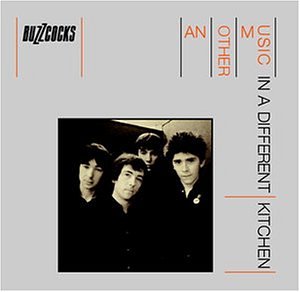
There are some albums which will never age and remain relevant no matter what the prevailing musical trends; Another Music In A Different Kitchen is one such album. Many predicted the demise of the band following the departure of founder member Howard DeVoto but this magnificent album proved the doom-mongers wrong. The Buzzcocks' magnum opus is not punk but brash rock and roll with pop overtones couched in the candid language of the day. It carries no pretensions and refuses to acknowledge any inspirational influences. This is simply four blokes having a good time. From the buzz-saw introduction of early single "Boredom" which both opens and closes the album but doesn't actually appear in its entirety, this is a quite breathtaking selection of songs but, in my opinion, side two is where all the nuggets are to be found. The brilliant jagged guitar that ranges throughout "Fiction Romance", the driving bass/guitar that punctuates the chorus of "Autonomy", the desperate, manic vocals which feature on "I Need" and the devastating drumming which rolls through "Moving Along With The Pulsebeat" and is one of the few occasions a drum solo can claim to be more than window dressing - all important considerations when understanding what makes this type of music so powerful. A true classic of the punk era without being a punk album. –Ian

Monday, November 15, 2010

The Human League “Dare!” (1981)

When Ian Craig Marsh and Martyn Ware left the Human League following the release of the band's second album "Travelogue", one would have thought that the sole remaining member Philip Oakey would have either called it a day, or risked a solo career. When the music press revealed that he was re-assembling the new Human League with an unknown Bass player ( Ian Burden), a slide projector operator (Philip Adrian Wright), two girls he had met in Sheffield club with no musical experience whatsoever (Joanne Catherall and Susanne Sulley), and a guitarist from the long defunct Punk band The Rezillos (Jo Callis), many must have thought that Oakey had lost the plot, and the world was half expecting the next appointment to ba a fire eating lion tamer from Halifax. Virgin uneasily supported Oakey's moves and recording started on the band's 3rd album "Dare", with The Stranglers producer Martin Rushent at the helm. Musically, Oakey wanted to retain the mechanical, industrial synthesised instrumentation and style, but introduce a Pop and Dance element to make the music a more viable proposition to the growing New Romantic following. He suceeds, and "Dare" is THE best Pop/Synth/New Romantic album of the era, a culmination of great Pop songs, dark vocals, and simple, crisp instrumentation, resulting in a number one album in the U.K. and a top 5 success in the States. There are many highlights, from the pure Pop duets "Don't You Want Me" and "Open Your Heart", the brilliant Dance numbers "Sound Of The Crowd" and "Love Action", the upbeat "Things That Dreams Are Made Of", and the paranoic "Darkness". A masterpiece of it's time, and Oakey would never be able to recapture this moment again. The album gave us an excitement that no one had come close to. –Ben H

Thursday, November 11, 2010

XTC “English Settlement” (1982)

What on earth was I thinking of? After English Settlement I gave up on XTC for 20 years! There's simply no excuse. I knew the first time I heard English Settlement I was listening to a classic and yet I still let my interest lapse. This is probably one of the most perfectly crafted double albums by any English band, notwithstanding Exile On Main Street and London Calling. It contains such complex, intricate constructions the word "song" seems too restrictive a word to describe their function. Like an absorbing novel, a spectacular movie or a sumptuous meal, this album can be enjoyed on many levels. There was an abridged version of English Settlement released at the same time as this double and I'm aware that many prefer it, feeling it cuts out the filler. I've never heard it and I never want to. Listening to English Settlement today, I can't think of a single track I'd want to get rid of. It would be like choosing a favourite from among my kids.

Considering how perfect this album is I've always felt that it was around the release of English Settlement that it all started going wrong for XTC. An overstressed and exhausted Andy Partridge was overtaken by stage-fright and suffered a breakdown soon after the album's release. As a result the album passed relatively unnoticed. How huge could this band have been if given the opportunity to publicise and tour English Settlement? How huge could this band have been if Partridge had ever been able to overcome his fear? Tragic really.

Even though Colin Moulding contributes the ska rhythms of "English Roundabout", the twisted "Fly On The Wall" and the excellent "Ball And Chain", English Settlement really is Partridge's album. "Senses Working Overtime" would provide the band with their only top ten single. "All Of A Sudden (It's Too Late)" is simply sublime. "Yacht Dance" is a mix of pure pop and English folk and Dave Gregory's Spanish guitar is a revelation and the flamenco rhythms continue to ripple through anti-gun rant "Melt The Guns". "It's Nearly Africa" brings the sounds of that continent into XTC's quaintly weird world and "Snowman" takes what is well-worn subject matter for a song – a crumbling relationship – and comes at it from an unusual perspective.

English Settlement is a fabulous album but, amazingly, still isn't the high point for XTC but, as an example of the quintessential English band playing the quintessential English eccentrics, it's difficult to beat. –Ian

Sunday, October 31, 2010

Magazine “Real Life” (1978)

You can't seem to pick up a music magazine nowadays without some interviewee citing Howard Devoto and Magazine as defining influences upon their own musical aspirations. Either that or some sycophantic retrospective which seems totally out of proportion for a band who were nothing more than a mote in the eye of music chronology. Amazingly, in this case, the hype is totally justified. Unhappy with the direction The Buzzcocks were taking and, possibly, recognising the limited shelf life of punk, Devoto formed Magazine and attempted to weave punk conviction into a more conventional and structured rock format. I'm convinced that longevity was no more guaranteed down this route, but it proved a panoramic trip whilst it lasted. The album is full of highlights and some quite astounding musical performances, particularly the bass and keyboards on the likes of "Definitive Gaze". Messrs Adamson, McGeoch, Jackson and Formula deserve praise. Personally I have reservations about Devoto's vocal style but as a discordant counterpoint to the music it works perfectly. "Shot By Both Sides" is spiky rock at its best and "The Light Pours Out Of Me" remains in my personal top twenty to this day. Magazine paved the path for post punk, pity they couldn't walk the road for longer themselves. –Ian

Tuesday, October 19, 2010

Circle Jerks “Group Sex” (1980)

When Keith Morris left seminal Californian Punksters Black Flag, it was obvious he needed something even more shocking, for pushing the boundaries of music and taste was it seems his ambition. So in 1979 he formed Circle Jerks  with Greg Hetson (Guitar), Roger Rogerson (Bass), and Lucky Lehrer (Drums). A reputation for the most wild local shows and enormous amounts of alcohol intake onstage and off started the folklore legend which attracted the disaffected SoCal Skater punks. The debut “Group Sex” is amazing by its brevity, with 14 songs spanning just under 16 minutes. It’s typical early American Punk thrash, razor sharp lyrics, tinny production and songs covering Politics, middle class Hollywood malaise, drugs, and of course sex... What seems unusual for the time and the sentiment, is that Hetson is a strong Guitarist and musically the band seems tight which in turn raises the quality above many of the bands of the period. The highlights include “I Just Want Some Skank”, “Beverly Hills” and “World Up My Ass”.That same year, the group was one of several California punk bands to be immortalized in the Penelope Spheeris documentary “The Decline of Western Civilization”, and live versions of four songs from “Group Sex” appear on the movie's soundtrack album. “Group Sex” is a rabid pulsing slice of aggression liberally smattered with gruff and gritty lyrics from Morris. Though not essential, it’s a useful snapshot of American Punk circa 1980.  –Ben

Thursday, October 14, 2010

Japan “Adolescent Sex” (1978)

Deciding enough’s enough is a tough call to make at the best of times. For a band accustomed to fame and its requisite trappings the severance must be that much harder. So it’s understandable why so many plow on regardless of their relevance or quality of work. The Stones, for instance, will continue until someone drops dead but their sound will remain timeless. On the other hand, Bon Jovi have had nothing to say since the early 90s but refuse to accept the fact. Japan belong to an elite club. Although diehards will argue, they jacked it in at just the right time leaving a stunning, if flawed, volume of work. I’ve always had a preference for their original incarnation as trash glam funksters a la New York Dolls or Hanoi Rocks but they were criminally ignored. There is some quite brilliant guitar playing from Rob Dean, particularly on "Suburban Love", "Wish You Were Black" and "Television" but this, along with David Sylvian's strangled, sneering, kazoo-like vocals were lost when they turned towards the New Romantic movement. Their musical vista of the seedy, dangerous, disposable isolation of modern day living deserves retrospective re-evaluation. –Ian

Tuesday, October 12, 2010

Devo “Are We Not Men?” (1978)

Imagine the scene. The house lights dim on an expectant crowd. It's difficult to see through the darkness but the swish of heavy fabric announces the stage curtains being drawn back. The spots slowly rise on a stage shrouded in a huge sheet of black plastic which rises to cover the vague shape of a drum-kit. A bright beam of white light picks out movement from under the sheet and flashes off a number of blades which pierce the plastic and slash vicious tears into the black skin. Like a sci-fi caesarean Devo push themselves through, clutching instruments and dressed in vivid yellow boiler suits. It takes a little time to rip the sheet away from the drums before they launch into "Uncontrollable Urge", but it's still got to be one of the best entrances ever.

Far more guitar-led than their later releases, Are We Not Men? Was considered radical upon its release in 1978. Much closer to the punk revolution than is realised, Devo savaged the American materialistic way of life and dared to suggest that humankind was de-evolving. From sex related psycho-babble ("Uncontrollable Urge") to satellites falling from the sky ("Space Junk"), from consumerism ("Too Much Paranoias") to genetics ("Mongoloid"), this is a very strange and, on one plain, deeply disturbing album. It remains a powerful indictment of the human condition. –Ian

Sunday, October 03, 2010

Replacements “Let It be” (1984)

For me this is far and away the best album The Replacements ever made. Some people say that they wish rock and roll was always imbued with the spirit that The Clash brought to it on "London Calling". I could easily say the same thing about "Let it Be". This is the perfect synthesis of rock aggression and songwriting finesse. A song like "Androgynous" probably wouldn't move me so much if it had been more slickly produced. The raw beauty of these songs makes me believe in them. There have been a million songs written about adolescence but "Sixteen Blue" is one of the only ones that really feels like it. The painful yearning and confusion of being sixteen is captured perfectly in those crunching guitar chords and especially the guitar solo with which the song closes. Rather than offering release, the end of the song raises the unresolved tension higher and higher. It is full of beauty and sadness. And then we have the album closer, "Answering Machine", with its fabulous, tight guitar playing, its earnest, pleading vocal and gorgeous melodicism. This is one of the best songs ever written about romantic obsession. Indeed this is one of the best rock songs period. In its rawness, energy and its dual loyalties to grunge and melody, in 1984 this album sounded like the future itself. –Javasean

Friday, September 17, 2010

Felt “The Strange Idols Pattern and Other Short Stories” (1984)

"The Strange Idols Pattern..." is the masterpiece of early indiepop, although is often less considered than Felt's fifth album, the organ driven "Forever Breathes The Lonely Word". Here Maurice Deebank provides the best guitar playing I've ever heard, a constant whirl of sweet jangly picking (on a 12 string guitar I think) and sometimes classical/Spanish melodies; Lawrence encapsulates such imaginative and brilliant solo playing in wonderful three-chord songs, sung with a monotonous and subtle tone that never sounds cheesy or pathetic like Morrissey's howling. I understand that such vocals can be considered boring, but I think they're the best accompaniment for the stream of background notes that - at least for me - has to be on the frontline, while the vocals are secondary. Absolutely great album, my favourite song here is "Crystal Ball", with the best guitar work ever made by Deebank, and a constant sense of tragedy that remains subtle and never explodes, not even in the final short solo. –Gneo

Tuesday, August 24, 2010

The Stooges “Raw Power” (1973)

“The raw power of Iggy Pop predated punk.” An anonymous quote I heard from some time back that sums up the very essence of what Iggy and the Stooges were about. And with their 1973 release, Raw Power, their muscle is in full-flex-mode. Famously produced by, David Bowie, and the band in a state of disorder - the combining couple crafted an album that, not only became a trailblazer, but also set the tone for what would come next, punk. Because of this, Raw Power, was molded into the blueprint of how rock ‘n’ roll should always be: dark, dangerous, and full of filth. The out of ordinary sound for its time has still never been equaled, many imitators came and went, struggling with the crass intensity, but they were all failed attempts. Iggy made a point to declare conventionalism was out, and in its place -- sleazy drug-fueled globs of noise. The Stooges remain one of my all-time favorite bands. And it has a lot to do with Raw Power. Some hipsters might declare, Raw Power, the weakest out of the holy trinity, due to its heavy praise, but there’s no denying its incendiary explosive strength. And on more than one occasion, I have been known to declare it my favorite album, ever. –Jason

Friday, August 20, 2010

Tears For Fears “The Hurting” (1983)

Even though I was well past the teenage angst phase when The Hurting was released it still managed to strike a mighty big chord. If you thought that electronic pop was nothing more than lightweight froth, then this album will come as something of a shock. This is as close as music gets to defining the nightmare that is adolescence. It is amazingly depressing yet musically uplifting. The melancholic atmosphere is palpable especially on gruesome downer tracks like "Watch Me Bleed" and "Start Of The Breakdown" which are perfect fodder for manic-depressives. For my money this is the only Tears For Fears album worth owning. Here they revel in an unrefined talent combined with a pristine sound which would later be soiled by over production on the likes of Songs From The Big Chair. All the songs on The Hurting have been penned by Roland Orzabal and I read somewhere that the album is a reflection of his troubled childhood. So, while I could relate to this from a teenage perspective, Orzabal was suffering through this at a much younger age – which gives the album an even more harrowing edge. As he says “memories fade but the scars still linger”.  –Ian

Friday, August 13, 2010

The Teardrop Explodes “Kilimanjaro” (1980)

It's amazing to think that one of the great eccentrics of popular music, Julian Cope, originated from what, on an initial listen, appears to be a straightforward post punk, electronic pop band. Delve a little deeper beneath the swathes of synthesised sound however and those original impression begin to subtlety alter. The lyrics carry an esoteric intelligence which belies their frivolous accompaniment and the unusual inclusion of a brass section is a masterstroke. But, as someone far smarter than me once said, "Just because you don't understand it doesn't make it profound". What gives this album it's cutting edge is the combination of all these elements which come together to form a frenetic, catchy, cohesive whole. The Teardrop Explodes were cut from the same cloth as Echo And The Bunnymen but their use of synths gave them a far more radio-friendly edge. I love the dumb chorus for "When I Dream" and the pounding drumbeats on "Bouncing Babies" and the way the keyboards seem to jog along with Cope's voice on "Brave Boys Keep Their Promises". The brevity of the brass on both "Ha Ha I'm Drowning" and "Treason" is both unexpected and uplifting. In fact the whole of Kilimanjaro can be treated as just an uplifting pop album but there's far more going on than that. The problem is that whatever is going on is securely locked inside Cope's mind. Yes there are references to television series The Outer Limits in "Sleeping Gas" and that song also mentions Rafferty, a seventies series staring Patrick McGoohan which was a precursor to Hugh Lawrie's House, but I've no idea why those things are namechecked. Like a line in another song says: "Poppies are in the fields, don't ask me what that means". The thing is, you don't need to know and maybe it's even better not knowing because you never know what to expect with Cope. Kilimanjaro is often overlooked when discussing post-punk music – it deserves better. –Ian

Tuesday, August 10, 2010

The Modern Lovers “The Modern Lovers” (1976)

This albums flawlessness is unparalleled. Jonathan Richman has crafted an ideal record that is filled with exceptional songs. "Pablo Picasso" has to be one of my favorites. I can never get enough of it and "Hospital" is right there alongside it. Just beautiful love stories told with such panache and Richman's voice is perfectly suited with each spoken word. Listening to "Hospital" is heartrending, but when reading the lyrics it's almost like a six year old wrote it. But, this album is anything but ordinary. It's a candid masterpiece that ranks at the top of all my lists. –Jason

Thursday, July 15, 2010

X-Ray Spex “Germfree Adolescents” (1978)

This is still one of most amazing, alluring and simply surreal records to emerge from punk rock -- or simply rock. It's a total one-off, and it hasn't dated a bit. Where the hell did it come from? You can trace the lineage of the Clash or the Pistols back to their roots; Poly Styrene simply seems to have emerged completely formed, as if what she took from punk wasn't a formula but a license to truly be herself. She is a wonderful lyricist, both critiquing and celebrating modern consumerism; for Poly, there's something both fascinatingly alluring and horrifying in the plastic throwaway society. Really, the closest you'll come to this record are J.G. Ballard's 1970s novels such as Crash and The Unlimited Dream Company. The title track -- about an obsessive-compulsive (as a result of rape?) -- is one of the most haunting love songs you'll ever hear. All this plus Styrene's banshee wail and Rudi's wild sax. So wonderfully alien -- next to it, Bjork's eccentricities looks like a tryhard wannabe. No wonder the band split after this; what was there left to say? –Brad

Monday, July 12, 2010

The Clash “The Clash” (1977)

While London Calling is often hailed as the finest effort by these guys, my tastes has always made me favor their debut above the rest. It really stands out as the best representation of what the Clash were capable of and why at one point, they were considered the only band that mattered. Unlike London Calling, there isn't a single bad song within the bunch. On this particular release (US version - which in my opinion is a more improved edition of the UK release) you get punk classics such as: "Clash City Rockers," "I'm So Bored With the USA," "White Man in Hammersmith Palais" (which just might be my favorite Clash song), "London's Burning," "I Fought the Law," "Janie Jones," and so on. Every last song is a stone cold classic and it just sounds so exciting no matter how many times it has been played. This is about as good as it get's when referring to punk rock and it has my vote as the finest from the "Brit-punk" era. Actually, make that from any era. Highly recommended to everyone and it's pretty damn close to being my all-time favorite record. –Jason

Siouxsie and the Banshees “Kaleidoscope” (1980)

And so the Banshees effectively start over, with a new drummer (Budgie), new guitarist (John McGeoch), and a new sound. They keep the heart of darkness that was at the core of The Scream, but swap the constant jittery guitar and fractured beat for something sleeker, stranger, more expansive and greater. Put it this way: if the first two albums were grainy black-and-white, Kaleidoscope is a big-screen epic in glorious technicolor. The band absorbs elements that would have seen out of place just a year earlier: the acoustic guitars of "Christine", the keyboards of "Happy House", the swirling psychedelic feel to much of the record. Yet the Banshee's signature sounds -- Siouxsie's emphatic vocals and Steven Severin's flowing bass -- are at the core of the album. A triumph, yet they would make even greater records down the track. –Brad

Wednesday, July 07, 2010

Iggy Pop “The Idiot” (1977)

This is probably Iggy’s best record, thanks to Bowie’s inspired production touches and obvious assistance in the songwriting department. The weird post-glam sonic breakthroughs Bowie and cohorts were making in these days provide the perfect foil for Iggy’s nihilistic hedonism and manic-depressive urbanity, which ranges from the proto-goth, blasé-in-crowd banality of “Fun” to the “hey, where the f*ck did everybody go?” sentiments of “Dum Dum Boys,” to a final affirmation to just go out for cigarettes in “Mass Production.” The proto-industrial soundscapes give Iggy’s alienated musings the perfect setting, and the Eno-inspired spaciousness in the production gives him room to rant, rave, mumble, and croon his way through the urban wasteland without miring him down; in other words, even when it’s a semi-catatonic drag, this disc rocks with a kind of cold sweat and shivery stagger that reinvents rawk with an ever-so-slight intellectual angle: which is what we call post-punk, even though this is, chronologically speaking, in punk’s very midst. But never mind the conceptual bollocks: play this and Joy Division’s first in rapid succession and the influence becomes readily apparent. Thing is, though, this is a far better album than that one. And I’d even venture to say that this is better than Bowie’s own “Berlin” albums, at least in some respects. The melancholy and menace are more precariously balanced, and Iggy walks a fine line in his lyrics between abstraction and specificity, in vocal persona between a man driven to murder by boredom and an idiot getting stoned and running around (thus splitting the difference between the two and showing up their identity under conditions of mass production, wherein China Girl is not quite what it seems). And the cold, steely textures are at once severely remote and warmly inviting, thanks to Tony Visconti’s richly minimalist mix, which evokes neon nights, gothic fog, factory noises, radio static, and the little voice of one’s bad conscience, among other things. Not only an important and influential record, but one that remains honest-to-goodness great, and fully rewards repeated listening. –Will

Saturday, June 12, 2010

Rancid “...And Out Come the Wolves” (1995)

Rancid's ...And Out Come the Wolves is an often overlooked classic from the 90's. I guess you could say that the album was my first true punk experience and I'm sure many of you would disagree about this being *true* punk, but anyway you look, it had massive influence on my musical growth and even got me into such hardcore legends as Black Flag, Minor Threat, Dead Kennedy's, and pretty much every other US punk band you can think of. I'll be glad to admit the fact that ...Wolves is a little overfilled, but all the songs are catchy as hell and I really couldn't do without any of them. Many among my age might credit Green Day for opening the doors to "old school" punk education, not for me because I never really saw them as punk or even being punk influenced (no matter how many times Billy Joe wanted to praise The Clash) and their records from that time have become increasingly stale through the years. Rancid, on the other hand still sounds fresh and full of forceful energy and show no signs of slowing down. ...And Out Come the Wolves is by far one of the greatest (and most underrated) albums from the 90's and continues to hold many fond memories from my youth that I wouldn't trade for anything in the world. –Jason

Flipper “Album: Generic Flipper” (1982)

Dirt, drug-fueled, filth-ridden punk is the best way to describe Flipper's Generic album. It's not exactly fast paced like many other punk bands of the time, but it makes up for it with its sheer brilliance of heavy sludge guitars and downer lyrics. If you're looking for in your face sweet talk go else where, this set is devoted to the noise crazed enslaving crowds. And every track plays off the next, ultimately concluding to the epic closer, "Sex Bomb" -- which is literally one of the most enthralling songs ever recorded. The whole album is an all filth, visceral, perfect mess. Highly recommended! –Jason